

Cell Tracking Dyes: How to Label and Follow Cells Over Time
Cell staining for follow-up studies is not only about making a cell population visible at one moment in time. In many experiments, researchers need to know where labeled cells move, whether they remain distinguishable after co-culture, whether they can still be identified after repeated observation, and whether a fluorescent label continues to report cell identity without being mistaken for background or transferred signal. This is the practical role of cell tracking dyes. Rather than acting as short-lived decorative stains, they are used to mark a selected cell population so that its position, behavior, and persistence can be followed across a defined observation window. In real workflows, this may involve tracking migration, distinguishing one population from another, monitoring labeled cells in a mixed system, or preserving cell identity during downstream imaging and phenotypic analysis.
What Cell Tracking Dyes Are?
Cell tracking dyes are fluorescent reagents used to pre-label a defined cell population so that those cells can still be recognized after subsequent handling, culture, movement, or interaction with other cells. Their purpose is not only to generate visible fluorescence, but to preserve cell identity during the follow-up stage of an experiment. This makes them especially useful when researchers need to distinguish one cell group from another or revisit the same labeled population after time has passed. In some workflows, the cells are tracked over only a few hours; in others, the signal is expected to remain informative across multiple days or through repeated rounds of observation. Because of this, cell tracking dyes should be thought of as time-aware analytical tools rather than simple endpoint stains.
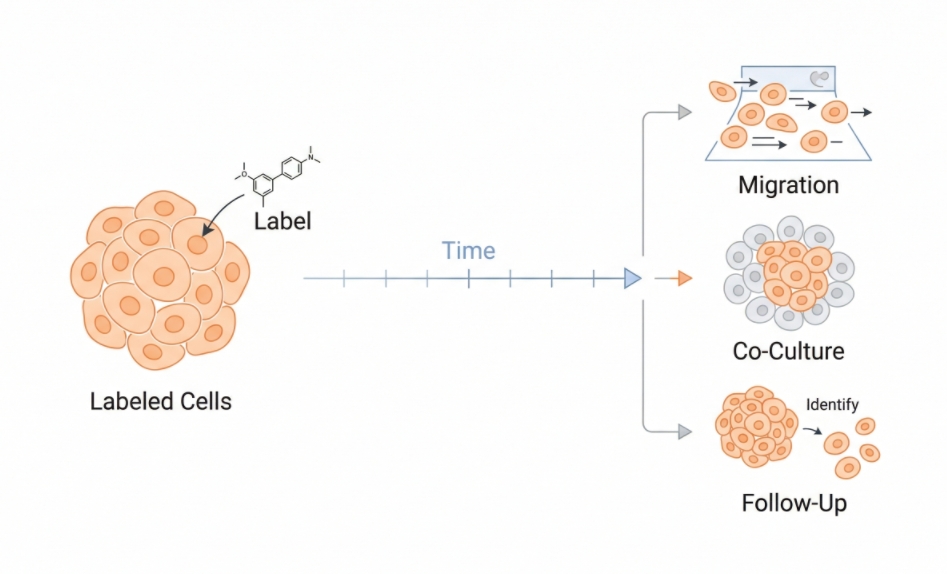 Fig. 1. Cell tracking dyes help label and follow defined cell populations over time (BOC Sciences Authorized).
The value of a tracking dye therefore depends on more than initial brightness. A useful cell tracking signal needs to remain interpretable over time, fit the imaging or analysis platform, and avoid creating ambiguity through rapid loss, redistribution, or transfer to neighboring cells. It also needs to coexist with broader fluorescent workflows built around fluorescent dyes, fluorescent probes, and other structural or functional readouts. In practical assay design, tracking is rarely an isolated step. It usually sits inside a larger experiment involving migration, co-culture, repeated observation, or multicolor analysis. That is why the right tracking dye is not chosen by color alone. It is chosen by how well its signal behavior matches the biological question, the follow-up window, and the level of confidence required for downstream interpretation.
What Cell Tracking Is Intended to Follow?
Cell tracking is used to follow more than position alone. In migration studies it may be used to observe how labeled cells move over time or respond to a directional cue. In co-culture systems it may be used to preserve the identity of one population inside a mixed environment. In follow-up experiments it can help determine whether labeled cells remain present, redistribute spatially, or behave differently from surrounding cells after stimulation or environmental change. The tracking signal therefore supports a continuity question: which cells are these now, compared with where or what they were earlier in the experiment?
Difference Between Tracking Dyes and General Fluorescent Stains
General fluorescent stains are often used to reveal structure, organelles, nucleic acids, viability-associated features, or short-term cell state. A tracking dye has a different priority. Its main task is to maintain cell distinguishability across an experimental interval. That means retention, low redistribution, compatibility with follow-up handling, and low biological disturbance often matter more than raw brightness. A dye that produces a beautiful image immediately after labeling may still be a poor tracking reagent if the signal fades too fast, transfers to adjacent cells, or distorts the cellular behavior being studied. This is why tracking dyes should be evaluated through the lens of time, not just appearance.
Why Cell Tracking Is Used in Modern Cell Experiments?
Cell tracking is widely used because many biological questions cannot be answered well by a single endpoint image or by total signal intensity alone. Researchers often need to preserve the identity of a labeled population while its environment changes around it. This is especially important when multiple cell types are present, when cells move or redistribute over time, or when later readouts must be linked back to a defined starting population. A tracking dye therefore adds continuity to an experiment: it allows observation to extend beyond one time point without losing the ability to recognize which cells are being followed.
- Tracking cell movement and redistribution: In migration, invasion, spreading, and positioning studies, the main analytical need is often to determine where cells go after labeling rather than where they were at the time of staining. Tracking dyes help preserve that identity so movement can be interpreted over a defined interval instead of inferred from separate static observations.
- Distinguishing cell populations in mixed systems: In co-culture, admixture, or transplantation-style designs, labeled cells may need to be distinguished clearly from unlabeled or differently labeled cells. A tracking dye is useful here because it preserves population identity during interaction, allowing downstream analysis to remain population-specific rather than collapsing into a mixed signal.
- Following cells through time instead of a single endpoint: Many experiments require repeated observation rather than a single terminal image. Tracking dyes make it possible to revisit the same labeled population after hours or days, which is often more informative than comparing separate endpoint samples that cannot be linked directly to the original cells.
- Supporting phenotypic and functional follow-up: A tracking signal can serve as the anchor that lets later readouts be assigned back to a particular starting population. When combined with phenotype markers or downstream structural stains, it becomes possible to ask not only what is happening in the culture, but which cells are responsible for the observed behavior.
Major Categories of Cell Tracking Dyes
Cell tracking dyes are most usefully classified by how they associate with cells and how that association behaves over time. This is more informative than organizing them by brand or color alone, because dyes with similar colors may follow very different retention logic. In practical terms, users usually need to decide whether they want membrane-associated labeling, intracellular retention, more reactive or stable cell marking, or simply a spectral option that fits a crowded multicolor design. The categories below reflect those real experimental decisions.
Membrane Labeling Dyes
Membrane-associated tracking dyes are used when researchers want rapid and visually intuitive marking of a cell population, often for short- to intermediate-term distinction. These dyes are especially attractive in workflows where cell boundaries or overall population identity need to be recognized quickly. Their limitations are equally important: because the membrane is dynamic, signal behavior can change with membrane turnover, redistribution, or close cell-cell contact. In co-culture experiments, membrane-associated routes may also require more caution if the goal is to minimize ambiguity from neighboring cells or membrane exchange-like effects. Their value is highest when the observation window and interpretation logic are matched to this mode of labeling.
Intracellular Retention Dyes
Intracellular retention dyes are designed to enter cells and remain associated with the labeled population for a useful follow-up interval. This class is especially relevant when the experiment needs more stable persistence than a purely surface-associated label can provide. Reagents such as Green CMFDA, 5(6)-Carboxyfluorescein diacetate, and related carboxyfluorescein-based compounds are representative of intracellular-loading routes used in fluorescence-based tracking workflows. These dyes can be valuable because the signal is less dependent on remaining only at the membrane, but they still require careful attention to loading uniformity, recovery, and how signal intensity behaves over time.
Covalent or Reactive Cell Tracers
More reactive cell tracers are chosen when users want stronger signal persistence or a more stable intracellular labeling logic. CFDA-SE is a relevant example in this category because it supports a more durable cell-associated signal than a purely transient fluorescent loading strategy. This kind of tracer is often useful when experiments require clearer follow-up across longer windows or when the label must remain more robust through washing and subsequent handling. At the same time, stronger or more stable labeling should not automatically be treated as superior. The real question is whether that stability improves interpretability within the intended assay without creating excessive biological disturbance or analytical burden.
Spectrally Distinct Tracking Dyes
Spectrally distinct tracking dyes are not important merely because they come in different colors. Their real value lies in multicolor compatibility. If the green channel is already needed for a reporter or phenotype marker, an orange-shifted tracer such as CytoTrace™ Orange CMTMR may be more practical for preserving panel flexibility. Likewise, other fluorescent tracking reagents such as Oxazole yellow or selected Lucifer Yellow derivatives may become relevant depending on the intended loading route, imaging system, or channel hierarchy. In real assay design, spectral diversity is often the difference between a tracking signal that integrates cleanly and one that forces undesirable compromises elsewhere in the experiment.
Comparing different cell tracking dye categories?
We can help match membrane, intracellular, and reactive tracking dyes to your retention needs, tracking window, and multicolor workflow.
Key Properties That Determine Tracking Performance
A tracking dye should not be judged only by how bright it looks immediately after labeling. The more important question is whether it continues to perform in a way that supports the experimental goal. Effective tracking depends on a small set of practical properties that together determine whether the labeled population remains recognizable, whether the biological behavior stays meaningful, and whether the signal still makes sense in the context of later analysis. These properties should guide selection more strongly than product familiarity alone.
- Retention over the intended observation window: Retention must be judged against the real timeline of the experiment. A dye that performs well for a short migration assay may be inadequate for several days of follow-up. The issue is not simply whether some fluorescence remains, but whether the signal remains strong and distinct enough to support confident identification of labeled cells throughout the intended window.
- Low transfer between neighboring cells: In mixed cultures or close-contact systems, signal transfer can blur the boundary between labeled and unlabeled populations. This undermines the core logic of cell tracking because the dye no longer reports origin cleanly. Low-transfer behavior is therefore one of the most important qualities in co-culture and interaction studies.
- Low toxicity and minimal biological disturbance: A tracking dye should preserve the behavior it is meant to observe. If labeling substantially alters viability, migration, adhesion, morphology, or growth, the signal may remain visible while the experiment becomes less trustworthy. Low toxicity is therefore not merely a convenience; it is part of signal validity.
- Signal consistency during follow-up: Tracking is a time-dependent readout, so a useful signal must stay interpretable over time rather than simply starting bright. Excessively rapid decline, broadening heterogeneity, or erratic redistribution can all weaken interpretability even when fluorescence is still present.
- Compatibility with other fluorescent channels: Most tracking dyes must coexist with other stains or markers. A signal that works in isolation may become problematic inside a multicolor panel if it occupies a critical channel, causes compensation burden, or interferes with a higher-priority readout. Good tracking performance therefore includes panel-aware compatibility.
Short-Term and Long-Term Tracking Approaches
Tracking duration is one of the most practical ways to organize cell tracking strategy. Users often begin by comparing reagents, but the more useful first step is to decide how long the signal needs to remain analytically meaningful. The same dye can perform well in one time window and poorly in another. A rational approach therefore starts by matching the observation interval to the likely behavior of the label, including decay, redistribution, and the effect of ongoing cell division or repeated handling.
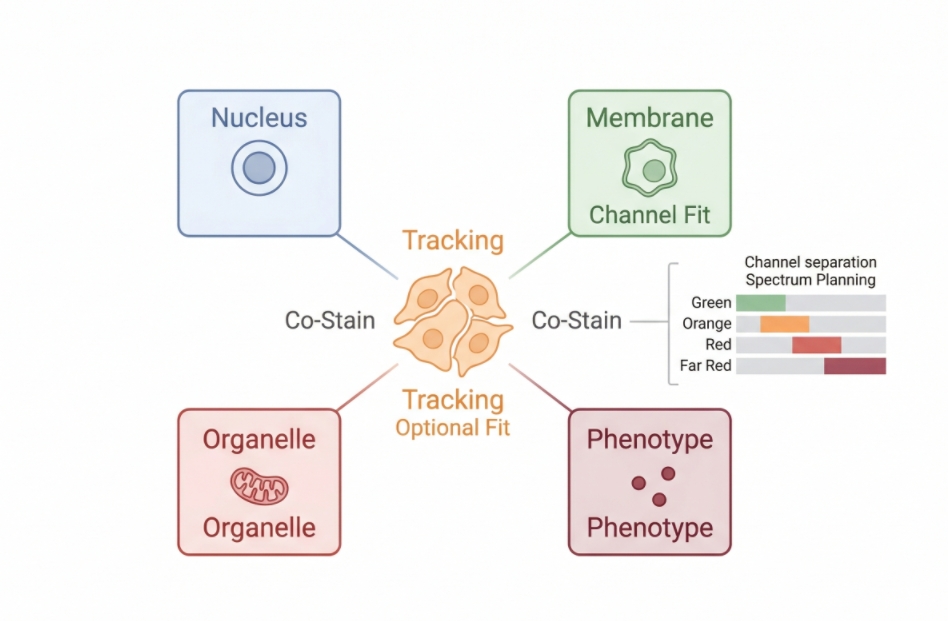 Fig. 2. Tracking duration is one of the most important criteria when selecting a cell tracking dye (BOC Sciences Authorized).
Short-Term Tracking
Short-term tracking is used in experiments that run for only hours or a limited follow-up interval, where the main goal is to distinguish a labeled population quickly and clearly. This is common in rapid migration studies, early adhesion measurements, or short co-culture identification steps. In these workflows, strong initial visibility, rapid and reproducible labeling, low background, and minimal disruption to immediate cell behavior are usually more important than extended signal persistence. The most useful short-term dye is therefore not simply the brightest one, but the one that creates a clean and stable distinction between labeled and unlabeled cells during the actual observation window.
Intermediate Tracking
Intermediate tracking applies to experiments that extend beyond immediate observation but do not require very long culture or lineage-style follow-up. These workflows often last overnight or for several days, so the label must remain stable enough to preserve cell identity while still being compatible with ongoing cell behavior, repeated handling, and multicolor analysis. In this range, researchers usually need a balance between retention and low disturbance, because weakly retained dyes may fade too early, while overly aggressive labeling may interfere with more subtle biological responses. A good intermediate tracking dye should therefore remain readable over the full assay window without creating artificial behavior or unnecessary analytical burden.
Long-Term Tracking
Long-term tracking is used when cells need to be identified after extended culture, repeated observation, or sustained biological follow-up, making retention, signal stability, and interpretability especially important. In these workflows, it is not enough for fluorescence to remain detectable; the signal must stay sufficiently associated with the original population to support confident identification after ongoing handling, environmental change, or cell activity. Long-term designs are also more vulnerable to complications such as division-linked dilution, membrane turnover, and cumulative biological disturbance, so dye selection must consider not only persistence but whether that persistence remains biologically and analytically meaningful throughout the full study period.
Matching the Tracking Window to Dye Behavior
The real selection problem is not whether a dye is short-term or long-term in the abstract. It is whether the dye’s actual signal behavior matches the intended tracking window. If the observation interval is longer than the signal can support cleanly, the experiment becomes hard to interpret even if fluorescence is still detectable. If the label is unnecessarily persistent for a short workflow, it may create avoidable panel burden or handling complexity. Matching duration to dye behavior is therefore one of the most important choices in tracking design. In practice, this means researchers should evaluate not only how bright the cells look immediately after labeling, but how that signal is expected to behave during the exact period in which biological interpretation matters. A label that remains strong for twelve hours may be excellent for migration imaging and entirely unsuitable for a multi-day co-culture follow-up. Conversely, a more stable tracer may be unnecessary in a short assay and may complicate multicolor design if it occupies a highly valuable channel.
How to Choose a Cell Tracking Dye?
Choosing a cell tracking dye is less about finding the single strongest label and more about matching signal behavior to experimental need. The same product can be well suited to one biological question and poorly suited to another. The most reliable approach is to decide first what the experiment needs the tracking signal to accomplish, then select the dye whose chemistry, retention, and spectral placement best support that outcome.
- Choosing by biological question: Migration studies, co-culture distinction, repeated follow-up observation, and broader longitudinal designs do not place the same demands on a tracking dye. The selection process should begin with what must be followed: movement, identity, persistence, or later phenotype assignment.
- Choosing by cell type and culture context: Suspension and adherent systems, robust and sensitive cells, and simple versus mixed cultures all impose different constraints on labeling. A dye that behaves acceptably in one system may create weak contrast or unwanted transfer in another, so selection should always be made in the context of the actual cell model.
- Choosing by observation method: Tracking for direct imaging, time-lapse follow-up, or population-based analytical readout may prioritize different signal features. Some workflows need strong visual contrast under fluorescence microscopy, while others need compatibility with broader cell imaging and multi-timepoint observation strategies.
- Choosing by tracking duration: The longer the observation window, the more strongly retention, signal persistence, and division-related change begin to matter. Time should therefore be treated as a primary decision factor rather than a secondary adjustment.
- Choosing by multicolor design: A tracking dye has to fit around the rest of the panel. If downstream analysis includes nuclear, membrane, organelle, or phenotype channels, the tracking signal should occupy a spectral position that preserves overall interpretability rather than competing with the most important readouts.
Need a cell tracking approach for migration, co-culture, or lineage-style follow-up?
We can help match probe retention, signal behavior, and channel placement to your experimental timeline.
Workflow Design for Cell Labeling and Follow-Up
A successful tracking experiment depends as much on workflow design as on dye chemistry. Many apparent dye failures are actually workflow mismatches caused by poor sample preparation, unbalanced loading, insufficient removal of free dye, or observation points that do not match the real biological timing of the experiment. Tracking should therefore be planned as an integrated sequence from cell preparation through final follow-up, not as a one-step labeling event.
- Preparing cells for reliable labeling: Cell condition at the time of staining influences how evenly the dye is taken up or associated, how well the cells recover, and how interpretable the follow-up signal becomes. Uniform sample quality is especially important when the goal is later comparison between groups.
- Balancing label strength and cell behavior: Excessively strong labeling may improve initial contrast while creating unnecessary burden on the cells. Weak labeling may preserve behavior but fail to support meaningful follow-up. The best condition is the one that keeps the population clearly identifiable throughout the required window without distorting the biology under study.
- Wash, recovery, and background control: Free or weakly associated dye left in the system can complicate interpretation later. Wash steps and post-labeling recovery therefore matter not only for aesthetics but for the analytical integrity of the tracking readout.
- Planning observation time points: Follow-up imaging or analysis should be scheduled according to the expected biological event and the likely persistence of the signal. Time points chosen for convenience rather than experimental logic often reduce the value of the tracking data.
- Defining what counts as successful tracking: Good tracking is not just visible tracking. It means that labeled cells remain distinguishable in a way that supports the actual scientific question, whether that question is about movement, persistence, co-culture identity, or later phenotype assignment.
Combining Cell Tracking With Other Fluorescent Readouts
Cell tracking rarely stands alone. In many workflows, the tracking signal is only one layer of a more informative multicolor experiment. Researchers may need to identify the tracked population while also observing cell position, intracellular organization, morphology, or state-dependent markers. This makes tracking dye selection inseparable from broader panel design. A useful tracking signal should fit into the downstream readout rather than forcing the rest of the experiment into a compromised layout.
- Combining tracking dyes with nuclear stains: Nuclear stains are often the most straightforward partners for cell tracking because they help define cell location, count, and approximate spatial distribution without replacing the tracking channel’s role. When used together, the nuclear channel can provide structural context while the tracking channel preserves population identity. This is especially useful when labeled cells need to be recognized within a dense or heterogeneous field.
- Combining tracking dyes with membrane and organelle stains: Tracking dyes can also be combined with membrane or organelle-focused channels when the experiment needs to answer not only where a labeled population is, but what is happening within those cells. For example, pairing a tracking dye with cell membrane stains can improve cell boundary interpretation, while pairing with organelle-oriented channels can add intracellular context. The challenge is to preserve distinction between cell identity and subcellular readout so that the tracking signal remains population-specific rather than being visually lost inside a crowded panel.
- Tracking in multicolor live-cell imaging: In live-cell multicolor workflows, the tracking channel must remain compatible not only with the optical panel but also with repeated illumination, ongoing cell movement, and the practical demands of time-lapse acquisition. Photobleaching, brightness imbalance, and channel competition become more important here than in simple endpoint imaging. A tracking dye that seems acceptable in a static test image may be much less satisfactory once the experiment involves repeated observation across time.
- Building interpretable multichannel panels: An effective multichannel panel has a clear hierarchy. The tracking dye should occupy a channel that supports cell identity without suppressing or being suppressed by the most important downstream readouts. This is why tracking design often benefits from the same planning mindset used in broader fluorescent dye selection workflows: channel balance, brightness matching, and readout priority are usually more important than choosing the most visually striking dye.
Common Tracking Failures and How to Prevent Them
Tracking failures do not always appear as complete signal loss. More often, the signal remains visible while the interpretation becomes unreliable. The image may still look convincing, but the experiment no longer answers the intended question because labeled cells are no longer clearly distinguishable or because the label itself has altered the system. Effective troubleshooting therefore means identifying which part of the tracking logic failed: persistence, specificity, biological compatibility, or multicolor readability.
- Signal loss before the tracking window ends: A dye that fades or becomes too weak before the planned observation period is not necessarily a bad dye in general, but it is a bad match for that experiment. Retention should always be evaluated against the real time window, not against whether some fluorescence remains at all.
- Dye transfer to unlabeled cells: Transfer to neighboring cells is one of the most damaging problems in co-culture and mixed-population assays because it blurs the boundary between origin populations. Even modest transfer can substantially weaken interpretation if the experiment depends on unambiguous cell identity.
- Cell behavior changes after labeling: If labeled cells migrate differently, attach differently, or appear stressed after staining, the signal may remain bright while the biology becomes less representative. Preventing this requires choosing a dye and loading condition that preserve the behavior being studied.
- Multicolor interference: A tracking dye may be analytically weak not because it fails on its own, but because the panel around it makes the signal hard to interpret. Spectral overlap, background accumulation, and channel crowding can all turn a technically adequate label into a poor practical choice.
- Visually strong but analytically weak tracking: The most misleading failure mode is a signal that looks excellent but no longer serves the experimental question. Tracking should ultimately be judged by whether it preserves interpretable cell identity throughout the required follow-up, not by visual brightness alone.
Applications of Cell Tracking Dyes
The most informative cell tracking experiments are usually those in which cell identity needs to remain linked to later behavior. Tracking dyes are not primarily valuable because they generate another fluorescent channel, but because they preserve that identity through movement, interaction, or repeated observation. Their strongest applications therefore arise in workflows where cells would otherwise become difficult to distinguish over time.
Cell Tracking in Migration Studies
In migration studies, cell tracking dyes are especially useful because they preserve the identity of the moving population throughout the observation period, making it possible to distinguish true cell displacement from simple changes in field composition or background signal. This is important in workflows such as wound-healing follow-up, chemotaxis observation, directional movement assays, and redistribution studies where the biological question depends on where labeled cells go and how they behave during movement rather than where they were at the starting point. A suitable tracking dye in this context should provide enough retention to survive the full migration window, enough contrast to keep labeled cells recognizable against surrounding unlabeled populations or matrix-associated background, and low enough biological disturbance that the labeled cells still move in a representative way. In practice, migration-focused tracking is strongest when the dye supports both positional continuity and behaviorally reliable observation, because a bright signal is of limited value if the labeling itself alters motility, adhesion dynamics, or edge behavior.
Cell Tracking in Co-Culture and Mixed Populations
In co-culture and mixed-population systems, cell tracking dyes help solve one of the central analytical challenges of the experiment: preserving the identity of one defined population after it enters a shared environment with another. This is especially valuable when the two populations differ in origin, phenotype, treatment history, or functional role, yet later need to be evaluated within the same imaging or analytical field. A tracking dye allows researchers to determine whether the labeled cells remain spatially segregated or intermixed, whether they change distribution after contact with another population, and whether later readouts can still be assigned back to the correct cells with confidence. The main requirement in these workflows is not simply retention, but retention with low intercellular ambiguity. If the signal transfers or becomes difficult to distinguish under close cell-cell contact, the central logic of the co-culture analysis weakens substantially. For that reason, co-culture tracking depends heavily on labels that preserve clear population boundaries over time and under the actual interaction conditions of the assay.
Cell Tracking in Follow-Up Observation
Follow-up observation studies rely on cell tracking dyes because they allow researchers to return to a previously labeled population after culture, treatment, environmental change, or repeated handling without losing confidence in which cells are being examined. This type of application is common in experiments where the main question emerges later than the labeling step itself, such as delayed morphology analysis, post-treatment survival assessment, recovery-phase observation, or repeated imaging across multiple time points. In these settings, the tracking signal functions as a continuity anchor: it links the later observation back to the original labeled cells rather than forcing the user to infer identity indirectly. The analytical value of the dye therefore depends on whether the signal remains clearly associated with those cells throughout the interval in which meaningful changes occur. A good follow-up dye supports not only persistence, but also interpretability under the full workflow, including washing, medium exchange, handling stress, and any biological change that may occur before the final observation point.
Cell Tracking in Multicolor Phenotypic Analysis
Cell tracking dyes become particularly powerful in multicolor phenotypic analysis because they add a population-identity layer to experiments that already contain structure, marker, or state-related information. Instead of asking only what markers are present in the sample, researchers can ask which markers are present specifically in the tracked cells, whether the labeled population shifts phenotype over time, or whether only part of the tracked group acquires a particular signal after treatment or interaction. This greatly increases interpretive precision in heterogeneous systems, especially when phenotype markers alone would not distinguish cell origin or experimental history. To work well in this context, the tracking signal must be spectrally compatible with the rest of the panel and sufficiently stable that it continues to identify the target cells throughout downstream staining, imaging, or analysis. The real advantage of this application is not added brightness, but added interpretive structure: the experiment gains the ability to connect phenotype to identity rather than treating all fluorescent information as if it originated from a single undifferentiated population.
Cell Tracking in Longitudinal Cell-Based Studies
In longitudinal cell-based studies, tracking dyes are useful because they preserve continuity across multiple observations, allowing researchers to follow how a defined labeled population changes over time rather than relying on disconnected endpoint snapshots. This type of design is especially important when the central question concerns persistence, redistribution, interaction history, or gradual behavioral change rather than a single terminal outcome. Over an extended timeline, labeled cells may divide, relocate, alter morphology, change relative abundance, or respond differently to environmental shifts, and the value of the tracking dye lies in making those later states traceable back to the original population. Longitudinal tracking therefore places unusually strong demands on signal stability, biological compatibility, and interpretive discipline. The dye must remain sufficiently associated with the labeled cells to preserve identity, yet it must do so without creating misleading persistence, excessive signal ambiguity, or cumulative biological burden over time. When matched well to the duration and purpose of the study, longitudinal tracking adds a historical dimension that simple endpoint staining cannot provide.
How BOC Sciences Supports Cell Tracking Workflows?
BOC Sciences supports cell tracking workflows through a combination of standard product supply, custom probe development, workflow-oriented technical guidance, and documentation support. Because cell tracking experiments often depend on retention, low transfer, multicolor compatibility, and minimal biological disturbance, effective support needs to address both reagent selection and experimental design. Our goal is to help researchers choose and apply tracking dyes in ways that fit the intended observation window, cell system, and downstream readout rather than treating all fluorescent labels as interchangeable.
Standard Cell Tracking Dye Supply
- Supply of multiple fluorescent reagents relevant to short-term and extended cell tracking workflows, including intracellular retention dyes, reactive tracers, and spectrally distinct tracking options.
- Practical product choices may include CytoTrace™ Orange CMTMR, Green CMFDA, CFDA-SE, Lucifer Yellow derivatives, and Oxazole yellow according to workflow fit.
- Coverage of different spectral regions to support multicolor panel planning and instrument-specific channel design.
- Product availability suited to exploratory studies, comparative method development, and broader fluorescence-based cell analysis workflows.
Custom Tracking Probe Development
- Support for customizing probe structure and fluorophore choice according to retention needs, signal behavior, and downstream analytical requirements.
- Flexible development routes for projects that require alternative channel placement, modified signal properties, or more tailored compatibility with specific cell systems.
- Practical support for aligning probe design with short-term tracking, extended follow-up, or mixed-population experiments.
- Development workflows that help connect reagent chemistry with the actual biological use case rather than optimizing only for raw fluorescence.
Workflow Guidance for Follow-Up Studies
- Guidance on labeling strategy, wash sequence, recovery design, and observation timing to improve cell tracking interpretability.
- Support for matching signal retention to the actual experimental window in migration, co-culture, and follow-up observation workflows.
- Assistance with reducing background ambiguity and improving signal behavior in multicolor tracking experiments.
- More structured planning for workflows that combine tracking with broader fluorescence imaging or repeated observation strategies.
Quality and Documentation Support
- Quality-related documentation support to help researchers evaluate reagent consistency and suitability for tracked-cell studies.
- Assistance with specifications relevant to purity, storage, and handling for fluorescent tracking reagents.
- Availability of structured documentation support such as COA- and SDS-related materials where needed.
- Better traceability for laboratories that require organized documentation alongside technical workflow planning.
Do You Need A Consultation?
BOC Sciences integrates cutting-edge fluorescence technologies to accelerate your research, driving next-generation solutions for drug discovery and diagnostics.
Transform Your Studies with Cutting-Edge Fluorescent Products
| Catalog | Name | CAS | Inquiry |
|---|---|---|---|
| A16-0032 | CytoTrace™ Orange CMTMR | 323192-14-9 | Bulk Inquiry |
| A16-0175 | Lucifer Yellow CH Dipotassium Salt | 71206-95-6 | Bulk Inquiry |
| A16-0070 | Biocytin hydrazide | 102743-85-1 | Bulk Inquiry |
| A16-0025 | 5(6)-Carboxyfluorescein diacetate | 124387-19-5 | Bulk Inquiry |
| A16-0024 | Green CMFDA | 136832-63-8 | Bulk Inquiry |
| A16-0088 | Lucifer yellow iodoacetamide dipotassium salt | 176182-05-1 | Bulk Inquiry |
| A16-0091 | Lucifer yellow CH ammonium salt | 188904-20-3 | Bulk Inquiry |
| A16-0017 | CFDA-SE | 150347-59-4 | Bulk Inquiry |
| A16-0078 | Lucifer yellow cadaverine | 149733-79-9 | Bulk Inquiry |
| A16-0204 | Oxazole yellow | 152068-09-2 | Bulk Inquiry |
High-Performance Fluorescent Tools for Your Research
- Fluorescent Probes Versatile tools for biomolecular and cellular imaging.
- Lysosomal Fluorescent Probes Acidic organelle markers for lysosome tracking.
- Cell membrane Fluorescent Probes Surface-labeling dyes for membrane dynamics studies.
- Other Cell Fluorescent Probes Functional probes for diverse cellular imaging studies.
- Golgi Fluorescent Probes Targeted probes for Golgi apparatus visualization.
- pH Indicators Fluorescent sensors for intracellular pH monitoring.
- Cytoskeleton Fluorescent Probes Probes for actin and microtubule visualization.
- Endoplasmic Reticulum Fluorescent Probes ER-targeted dyes for organelle structure analysis.
Explore More Topics
Online Inquiry


